“The substance of the mind must therefore be material,
since it is affected by the impact of material weapons.”
Lucretius, On the Nature of the Universe
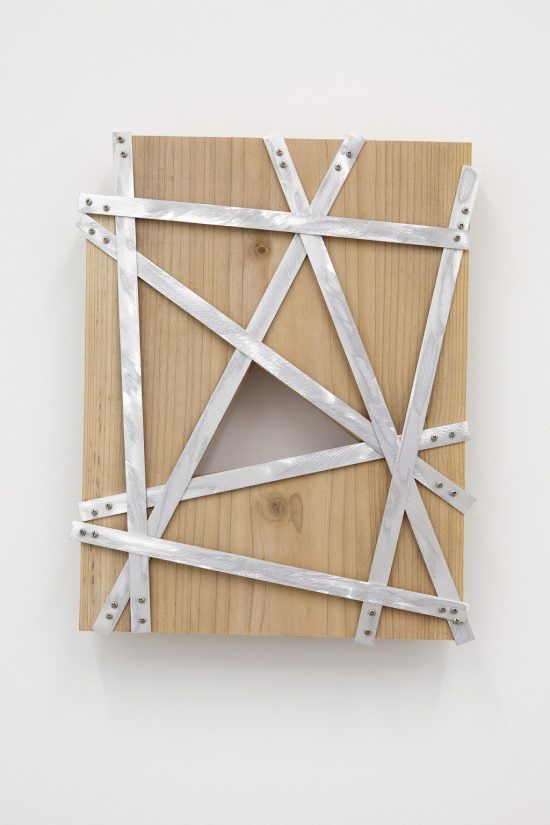
Traditionally, matter has been conceived as lying in wait for a creator to come along and shape it. Whether emitted from God or a concept-mongering Mind, thought flows through an immaterial channel to give the world form. In the upcoming exhibition, four artists invert this picture by emphasizing the activity of matter in spurring conceptual change. Subjectivity is no longer something insulated from the physical world, but instead shown to issue from it.
One gets a sense for this inversion via the disruptive role materiality plays in relation to the exhibition’s various geometrical forms. The supposed purity of abstraction is ceaselessly worked upon by traces of physical production and decay. These traces speak to the perpetually revisable nature of form, and how material processes themselves transform thought by pushing back on given determinations.
The hardware of abstraction tirelessly labors to impose its apparatus upon material flows, freezing them and reifying them into objects that conform to unquestioned, pre-established needs. This exhibition, however, presents much-needed examples of such a system in breakdown. By refusing to straightjacket change to what is currently thinkable, each artist instead presents materiality as a means to re-legislate our orientation toward the past.
We find this in Mariana Chkonia’s work, where her woolen felts demonstrate a repurposing of ancient Georgian textile-making techniques in order to create monumental and abstract forms. These processes require an immense amount of physical exertion, often distributed across multiple hands. This labor, by drawing upon the incomprehensible time spent on reproducing and maintaining a tradition, works on these organic materials to refashion them for a foreign context, exceeding the purposes from which they arose.
Thea Djordjadze’s installations draw upon materials and forms found in modernist design practices. But contra the modernist aim of emancipating functionality from the fetters of tradition, Djordjadze extracts from her objects any sense of such emancipated utility. In fact, the modernist dream of escaping tradition itself becomes a tradition to borrow from,completing an inversion and even displaying a certain quixotic ethos in its project. The result is a constellation of objects stripped of their fetishism, displaying instead only relations liable to construction and revision.
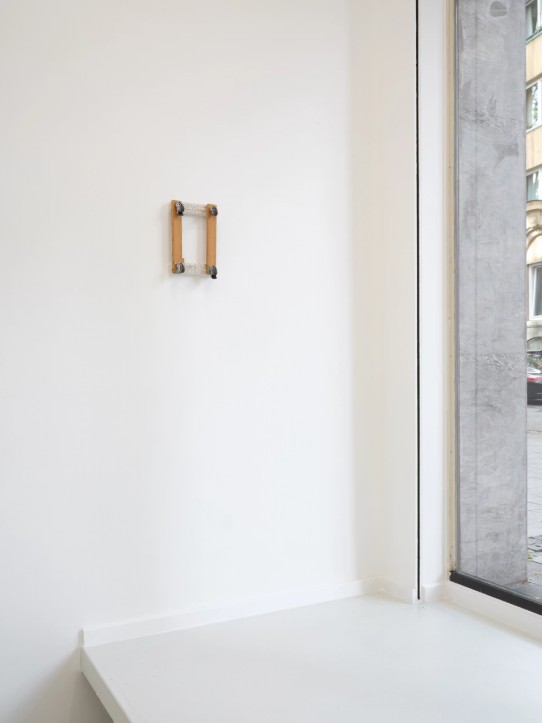
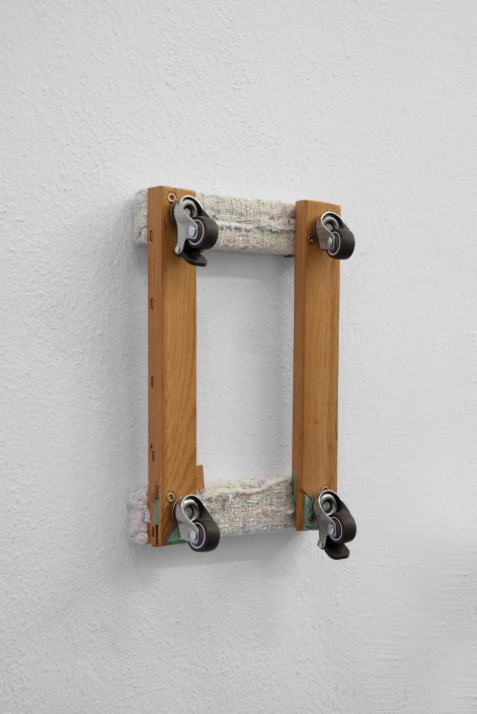
One drawing by Brad Kronz re-enacts a procedure from the artist’s past in which a photograph would be recreated in clay and then drawn. Kronz skips the middle step, keeping the object in the two-dimensional plane, and thus opting for a process more akin to copying. Another drawing captures a boundary between two decades, complicating the problems of representation due to both its non-visual subject matter and the collective failure to demarcate recent historical periods. A miniature dolly is created out of stretcher bars and other art materials, implying a functionality it fails to offer, as if its history prevents it from entering lived circulation. Ser Serpas’ mandalas thematize the rise of geometric forms out of materiality, dispelling the notion of the physical world as an ersatz replica of ideal forms. The discordant coloring of the plastic speaks to an indeterminate rawness, from which form arises as a void—isolated from yet constituted by its materials. Traditionally, the function of mandalas has been to induce trance-states and provide points of contact with the sacred. In this reworking, there is a sense that such a function remains, albeit profaned—one is now entranced by a lack,rather than the excess of a divine presence. Value might appear to be made out of thin air, to remain gleefully untouched by entropic meltdown, but it is instead the compressed product of material collisions. In these works, both wear-and-tear and traces of the production process dissolve the veneer of immutable structure, forcing re-contextualization from the inside. The viewer is then placed in a lively world of objects constantly overcoming and undermining their determinations.
– Arlo Oblaney


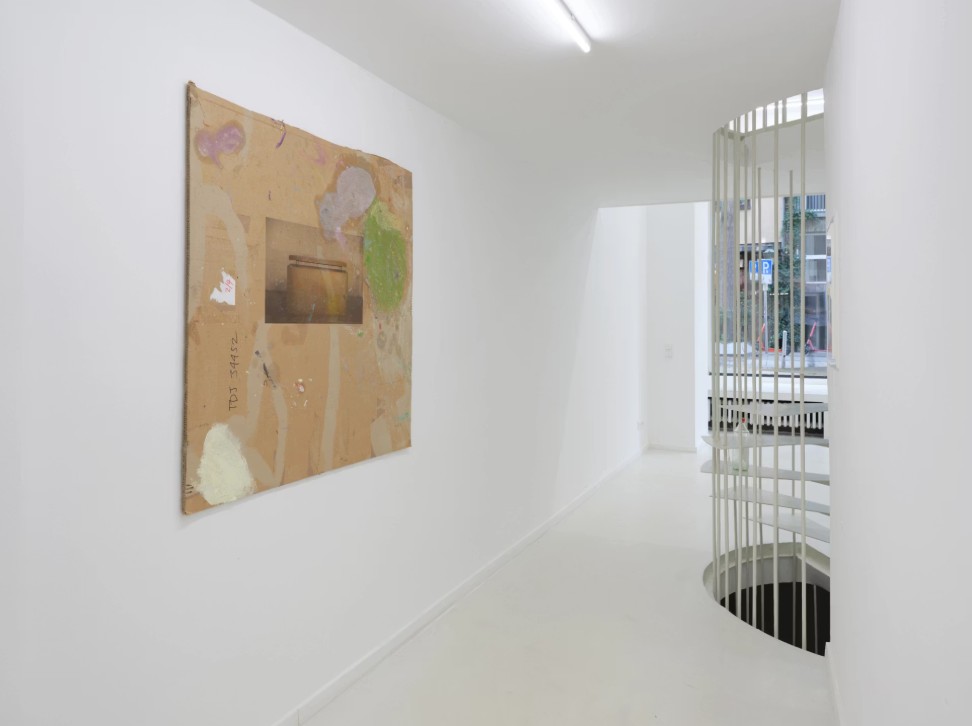


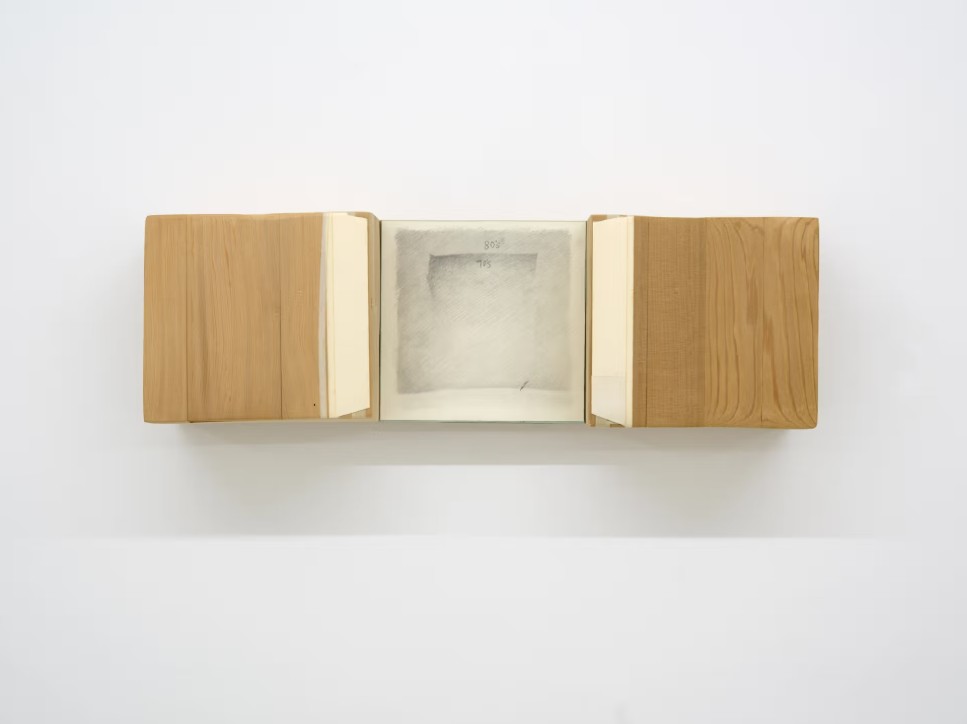


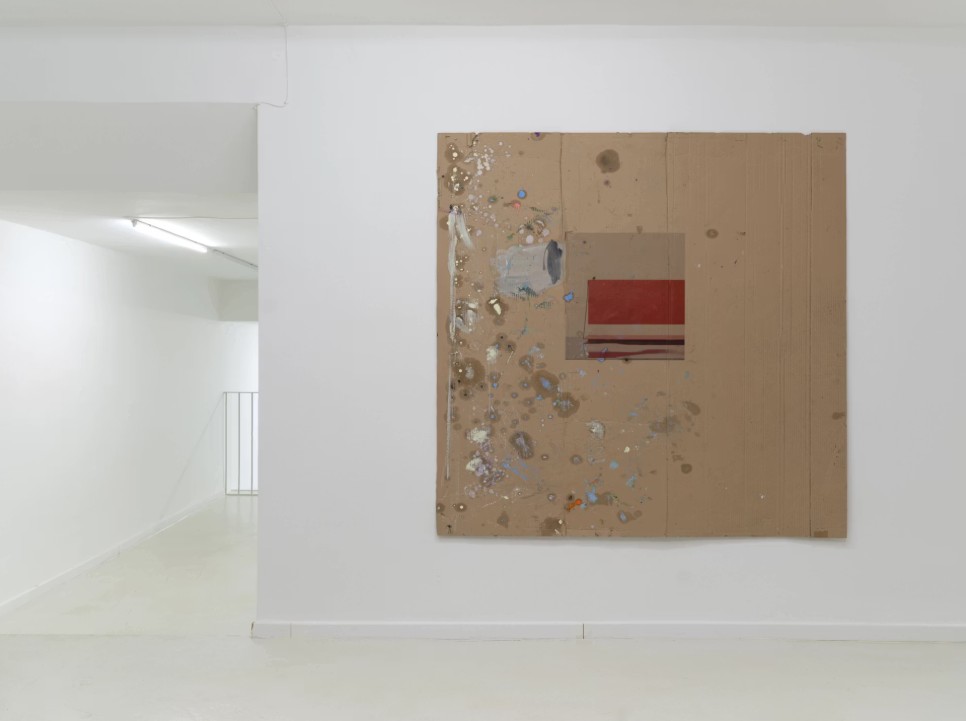

Artists: Mariana Chkonia Thea Djordjadze Brad Kronz Ser Serpas
Title: Platzhalter/Placeholder
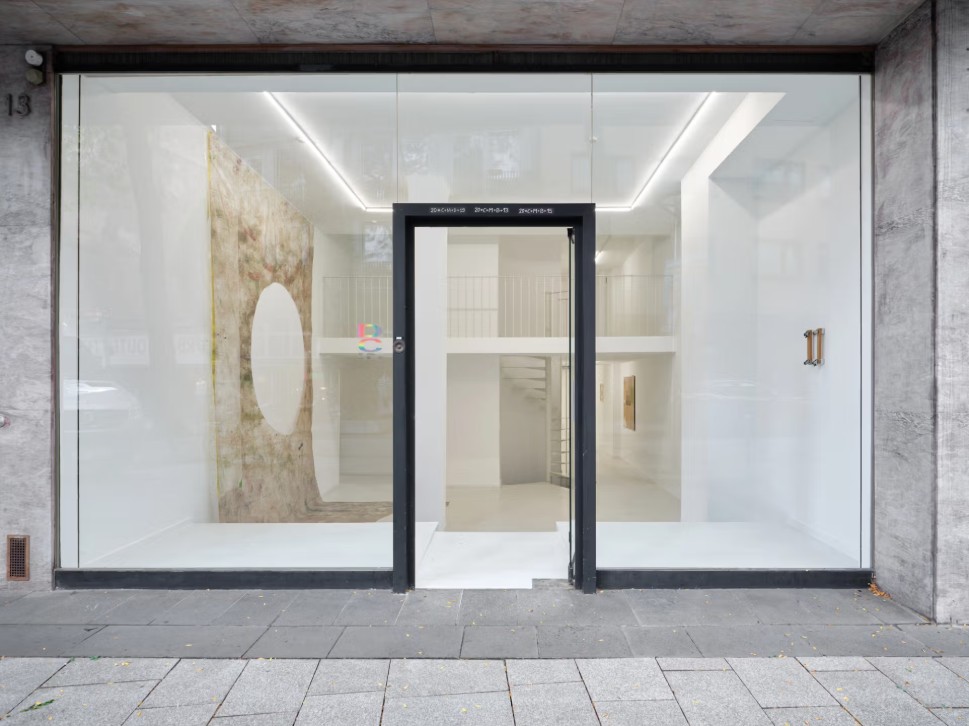
Venue: LC QUEISSER, Cologne
Dates: 5 September 2025 – 18 October 2025